
Red 40 Alternatives: Natural Replacements for Allura Red
In this article
Red 40, also known as Allura Red AC, FD&C Red No. 40 or E129, is one of the most widely used synthetic red colors in food and beverages. It is still permitted in the United States and Canada, but brands and retailers are moving away from it, and many manufacturers are now looking for a natural replacement that holds up in their process.
What is Red 40?
Red 40 is a synthetic azo dye made from petroleum-derived raw materials. It gives a bright orange-red shade, it is stable and it is inexpensive. On labels it can appear as Red 40, FD&C Red No. 40, Allura Red AC, Allura Red or E129.
Where is Red 40 used?
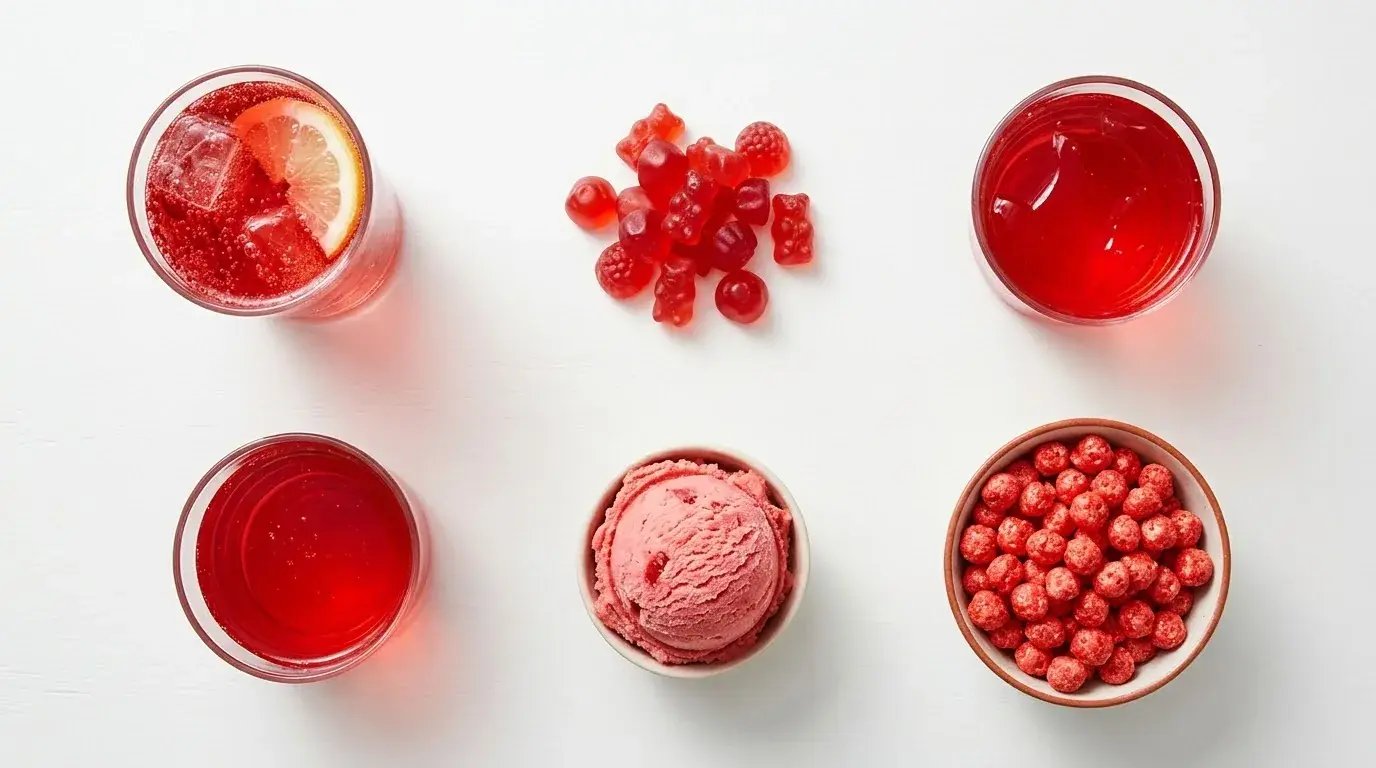
- Beverages and powdered drink mixes
- Candy, gummies and confectionery
- Breakfast cereals and snacks
- Gelatin desserts, frozen desserts and ice cream
- Bakery products, icings and fillings
Where does regulation stand?
- United States: it remains a permitted color. In April 2025 the FDA and the Department of Health and Human Services asked the food industry to voluntarily phase out petroleum-based synthetic dyes, including Red 40, with an initial target of the end of 2026. In its October 2026 tracking update, the FDA says it is working with industry to eliminate them by the end of 2027. This is a transition agreed with industry, not a ban.
- European Union: it is permitted, but foods that contain it must carry a label warning about possible effects on activity and attention in children.
- Canada: it is a permitted food color, listed as Allura Red.
For a manufacturer, the practical pressure comes from customers: private label programs, school foodservice and national brands are already asking suppliers for products without synthetic colors.
What can replace Red 40?
No single natural color replaces Red 40 in every product. The right choice depends on the target shade, the pH of the product, the heat process and how much light the product sees on the shelf.
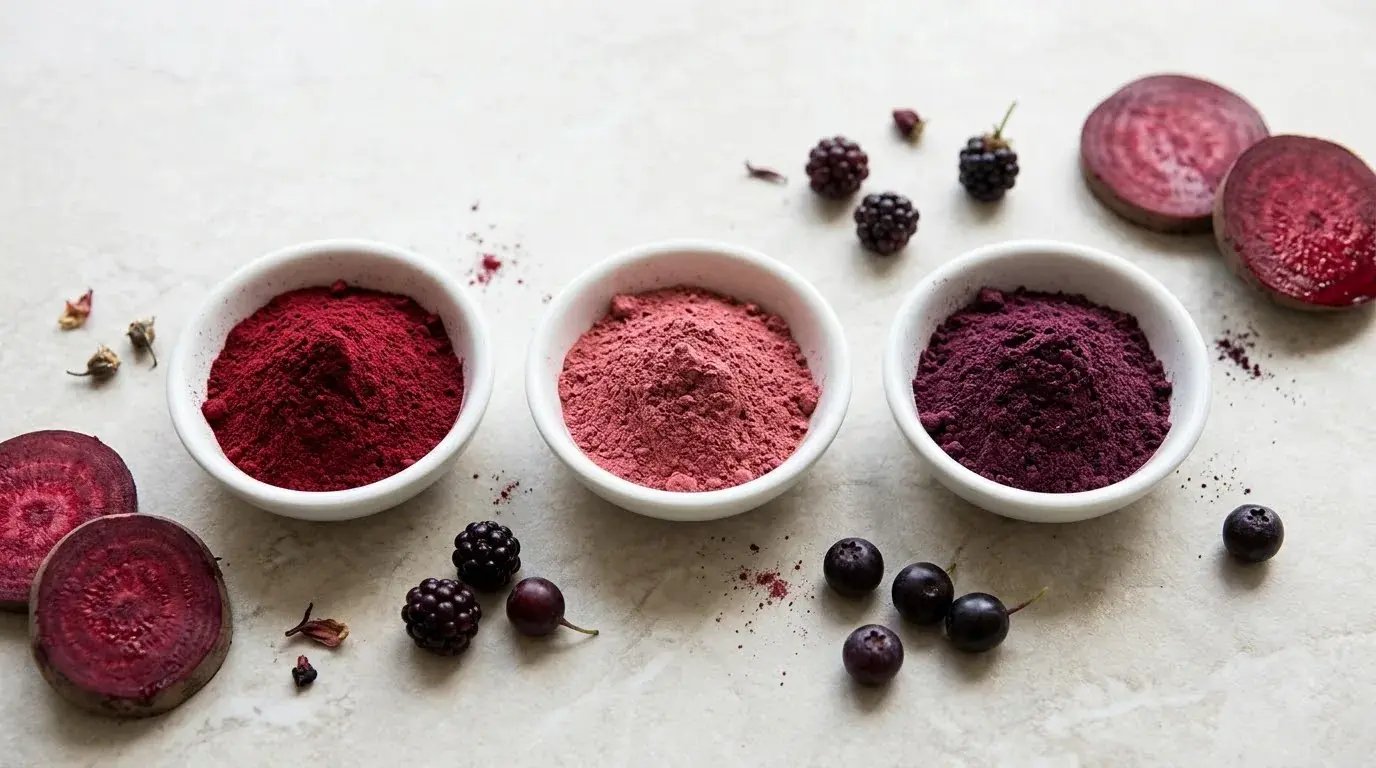
| Natural color | Shade | What to watch |
|---|---|---|
| Carmine (E120) | Pink to violet red | Not suitable for vegan or vegetarian products |
| Betanin (beet) | Pinkish red | Sensitive to heat |
| Anthocyanins | Red to purple | Shade shifts with pH |
How the switch works
- Define the target shade with a sample of the current product.
- Share the base data: pH, heat process, packaging and shelf life.
- Match the color with one or more natural options.
- Test stability in the finished product over its shelf life.
Next step
Send a sample of your product or the shade you are looking for. FARBE NATURALS matches the color with natural options and sends samples for your trial.
Request a color match · See natural colors
Frequently asked questions
Are Red 40 and Allura Red the same thing?
Yes. Red 40, FD&C Red No. 40, Allura Red AC and E129 are names for the same color.
Is Red 40 banned in the United States?
No. It remains a permitted color. The FDA is working with industry on a voluntary phase-out.
Is carmine the same as Red 40?
No. Carmine (E120) is a natural color obtained from cochineal. Red 40 is synthetic.
Which natural color is closest to Red 40?
It depends on the product. Many applications start from carmine or from a blend with betanin or anthocyanins, and the shade is adjusted against a sample.